Top 12 Tips for Choosing Fireworks for a Garden UK, The Bonfire Night Party Secret
Discount Fireworks is a Fireworks Store built for people who want a brilliant night without guesswork. If you are planning a Bonfire Night garden party in the UK, choosing the right fireworks is the difference between a smooth, exciting show and a stressful, smoky, noisy scramble.
This guide shares the real secrets people overlook, not just which effects look good, but how to match fireworks to your garden size, audience, noise expectations, local rules, and the weather on the day. Use the tips below as a step by step checklist. You will end up with a display that feels intentional, looks bigger than it cost, and stays as safe as possible.
The goal is simple, build a display that fits your space and your guests. That means thinking like a display designer and a safety officer at the same time.
Tip 1, Measure your garden and plan safety distances first
The biggest mistake for garden fireworks is shopping by excitement before shopping by space. Your garden size determines what you can safely use, where spectators can stand, and how you can position firing points. Start by measuring the usable area, not the full property. Ignore flowerbeds you cannot stand on, slopes, ponds, low branches, sheds, fences, and overhead cables.
Create three zones. Zone one is the firing area, a clear and flat patch of ground where fireworks are placed. Zone two is the safety buffer, the minimum distance between fireworks and people, pets, cars, sheds, fences, and anything that could catch fire. Zone three is the spectator area, ideally slightly uphill or level, so people can see without leaning forward or drifting closer.
Different fireworks require different distances. Many consumer fireworks include guidance on the label. Follow that label over any general advice. As a practical approach for a typical UK garden, look for items designed for shorter distances, often called garden fireworks or low hazard fireworks. If a firework’s recommended distance pushes spectators into narrow side paths, doorways, or near parked cars, it is a sign that you should choose smaller items or relocate the show.
Also think vertically. A small garden can still handle a great display if you focus on fountains, smaller cakes, and effects with controlled height. If you have trees, conservatories, or nearby windows, avoid high rising effects that drift. You are not aiming for maximum height, you are aiming for maximum impact within your safe footprint.
Tip 2, Choose the right firework category for a garden in the UK
In the UK, consumer fireworks are commonly sold in categories like F1, F2, and F3. The category is not just a marketing label, it is a clue about intended environment and required distances. For many garden parties, F2 is the typical sweet spot because it is designed for outdoor use in confined areas. F3 is often intended for larger open spaces and can require greater safety distances. The exact distances and suitability vary by product, so read labels carefully.
When shopping, ask yourself two questions. First, what is the closest your audience could realistically stay behind a boundary, even after a few hot drinks and excited kids. Second, what is the closest an unpredictable hazard sits, like a shed with paint tins, a neighbour’s fence, a row of dry shrubs, or a parked car. If either answer makes the required distance hard to guarantee, choose a smaller category or a different product type.
Do not rely on assumptions like “it is fine, we did it last year.” Gardens change. New fences, new decking, and new neighbours can turn last year’s plan into this year’s risk. If you want a bigger looking show in a small space, your best upgrade is smarter selection, not higher category. A well chosen set of F2 cakes with different effect styles will look more impressive than one overly powerful item that you cannot place safely.
If you are unsure what is appropriate for your layout, it is worth building a basket around a pre planned selection box aimed at gardens, then adding one or two feature cakes that still match your space and distances.
Tip 3, Buy legal, tested fireworks from a reputable UK retailer
The Bonfire Night party secret nobody wants to admit is that the best display starts before you light anything. It starts with buying fireworks that are legal for consumer sale in the UK and properly tested. Cheap imports, unofficial sellers, and products without clear labelling can introduce unpredictable performance, higher fallout, or confusing fuse timings.
Look for clear packaging, clear instructions in English, and appropriate conformity markings used in the UK market. Labels should include a category, safety distance, net explosive content, and instructions for use. You should also see a manufacturer or importer name and contact details. If a product looks like it has been repackaged, has missing instructions, or lacks a traceable source, walk away.
Buying from a specialist Fireworks Store like Discount Fireworks has practical benefits. Stock is handled and stored in the right conditions, you get access to product knowledge, and you can choose from ranges designed around common UK garden constraints. You are also far more likely to get consistent performance. Consistency is what makes a home display feel professional. When timings and heights behave as expected, you can plan a sequence, keep guests at a safe distance, and avoid last minute improvisation.
Finally, remember that legality and safety are not just personal choices. They affect your neighbours, your guests, and your local community. A safe display is a considerate display.
Tip 4, Match noise level to your audience, your street, and your pets
Noise is often the number one cause of complaints and anxiety on Bonfire Night. It is also one of the easiest factors to plan for if you decide early what kind of night you want. Some guests love loud crackle and big salutes. Others have young children, sensitive hearing, PTSD triggers, or pets that will panic. Many UK neighbourhoods are compact, which means noise carries quickly and can echo between houses.
Start by listing who will be there. If you have toddlers or a baby sleeping nearby, focus on fountains, low noise cakes, coloured stars, and effects described as glitter, brocade, chrysanthemum, peony, or willow. If you know pets will be present, keep them indoors in a quiet room, close curtains, and consider background sound inside. Then choose fireworks that minimise sharp bangs.
Think about your neighbours too. If you live near animals, stables, or a street with lots of dogs, a lower noise set is often the smarter choice. You can still create drama with brightness, colour changes, and fast sequences. A rapid fire cake with vibrant colours can feel intense without relying on loud reports.
Also consider how noise affects safety. Very loud effects can startle guests into stepping forward or turning away at the wrong moment. A calmer sound profile keeps the crowd steady, which helps everyone stay behind the boundary.
Tip 5, Choose firework types that suit a garden, not a field
Some fireworks are naturally better for gardens because they are stable, predictable, and contained. Others can be great but require more space and more experience. The trick is to build your shopping list around the garden friendly categories, then add one or two special pieces only if your layout supports them.
Fountains are ideal for small to medium gardens. They are ground based, generally controlled, and create a strong visual effect close to the audience. They are also excellent as “bridge” items between bigger shots, because they keep the sky busy while smoke clears.
Cakes and barrages are often the backbone of a garden display because they are single ignition, pre fused, and produce a sequence of shots. Look for cakes that specify the recommended spectator distance you can actually maintain. Cakes with mixed effects, colour changes, and a rising finale can deliver that professional feel without needing multiple separate items.
Roman candles can add variety, but they require careful handling and stable placement. If you use them, treat them like a mini cake, secure them upright, and never hold them. For many households, cakes are simpler and safer.
Rockets can look brilliant, but they are one of the trickiest items for a garden. They need a proper launching tube or a stable holder, clear overhead space, and enough distance to manage drift. In tight gardens, rockets can exit the safe area if wind catches them. If you still want the rocket look, consider cakes that simulate comet rises and bursts without the same drift risk.
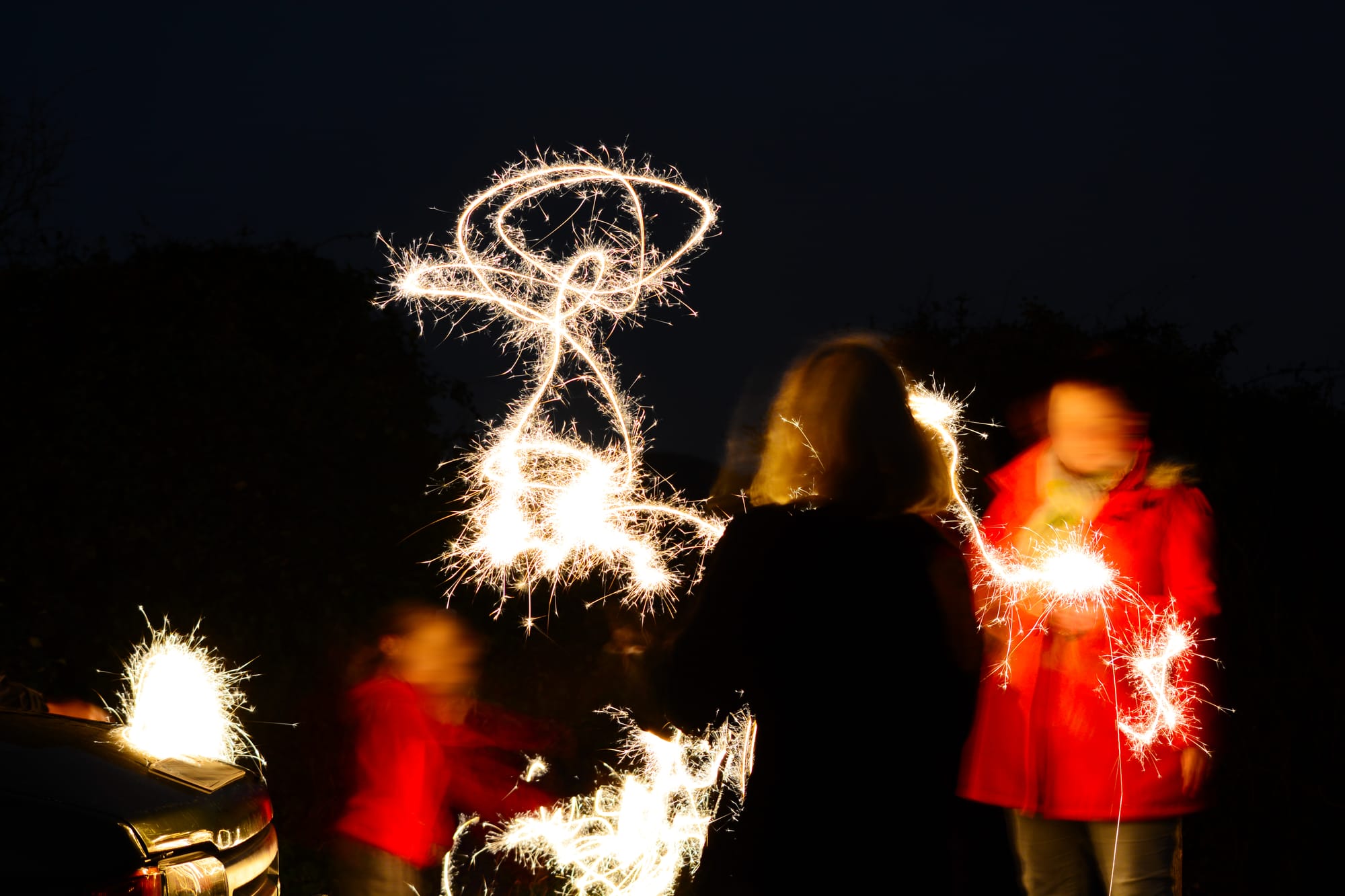
Sparklers can be wonderful for kids and photos, but treat them with respect. Use gloves, keep a bucket of water or sand ready, and make sure children are supervised closely and spaced apart.
Tip 6, Build a display with pacing, not just power
A great Bonfire Night display is a story. It has an opening that grabs attention, a middle that builds variety, and a finale that feels like a reward. People often buy fireworks that are all the same intensity, then light them randomly. The result is a show that feels flat, even if the fireworks are high quality.
Start with a bright, friendly opener. A fountain or a small cake with colourful effects works well. It gives you time to settle the crowd, check the wind again, and confirm everyone is behind the line. It also helps children adjust to the sound level gradually.
Next, plan the middle like chapters. Rotate effect types. For example, follow a noisy crackle cake with a quieter colour focused cake. Then add a fountain, then a multi shot cake with a different sky pattern. This variety keeps attention high and makes the whole display feel longer.
Save your fastest, brightest items for the final third. A common trick is to run two strong cakes back to back, then end with a finale style cake that has a clear increase in pace. If you have a single premium cake in your basket, that is often best as the last item. Guests will remember the ending most.
Write your firing order down on paper, in large print, and keep it dry. On the night, excitement and low light make it easy to forget what is next. A simple plan reduces time spent standing in the firing area and makes the whole event safer.
Tip 7, Plan around wind, weather, and smoke management
UK weather is famous for changing quickly, especially in November. Wind, drizzle, and damp air affect how fireworks perform and how enjoyable the night feels. The secret is not trying to fight the weather, it is choosing fireworks that cope well and planning your layout so smoke does not ruin the view.
Always assume wind will be present. Place the firing area so that the wind carries smoke away from spectators and away from open windows and doors. If your garden only allows one layout, be prepared to shorten the show if smoke starts to hang in the air. There is no point firing a big cake into a grey cloud where nobody can see the colours.
Some effects produce more smoke, especially certain crackle and heavy glitter compositions. If your garden is enclosed by fences on all sides or surrounded by houses, choose a mix that includes cleaner burning effects and include pauses between big cakes. A fountain can be a good pause because it creates a lower level effect while the sky clears.
Damp conditions matter too. Keep fireworks in original packaging until you are ready to use them. Have a plastic box or bag available to move items outside in batches rather than leaving them exposed on a table. If the ground is wet, place cakes on a solid board and consider stabilising them with bricks at the sides, never on top of a firework.
Finally, think about visibility. If fog or drizzle is heavy, smaller effects closer to the audience can be more impressive than high bursts that disappear. In poor visibility, fountains and lower height cakes can be the smartest choice.
Tip 8, Prioritise stability and secure placement for every item
In a garden, uneven paving, soft soil, and decking can make fireworks unstable. Stability is not a boring detail, it is a key part of choosing the right products. A great looking cake is only great if it stays upright and performs as designed.
Choose cakes with a wide base where possible. If a cake is tall and narrow, it may need extra support or it may be better suited to a larger, flatter area. For any cake, place it on a flat, non slip surface. A thick wooden board can help if the ground is soft or wet. If you use a board, ensure it does not rock.
Secure items properly. Many people use bricks to steady cakes. If you do, place bricks around the sides, not on top. Never tape over instructions or fuses. Keep a clear approach route so the person lighting can step in, light, and step back without tripping.
For rockets, stability is critical. Use a proper launching tube set in a heavy base, such as a bucket filled with sand, and keep it vertical. Never push a rocket into the ground, and never hold one. If you cannot guarantee a safe, stable launch, skip rockets and choose a cake that gives a similar aerial effect.
Also plan your firing layout to avoid cross fire. Do not point angled items toward fences or trees. Keep a tidy spacing between fireworks so that one item cannot topple into another if it misbehaves.
Tip 9, Think about fallout, debris, and next day clean up
Fireworks are not just light and sound, they also create packaging waste, paper fallout, and sometimes sticks or plastic components depending on product type. A smart garden display considers where debris might land, how you will clean it, and how to reduce the mess without reducing the fun.
In small gardens, fallout can land on roofs, in gutters, and in neighbouring gardens. Wind direction matters again. If wind is blowing toward a neighbour’s freshly cleaned patio or toward parked cars, focus on lower debris items like fountains and certain cakes, and avoid products that scatter a lot of paper at height.
Rockets can drop sticks. If you use them, plan where they might land and check that area the next day. If you have a pond, avoid fireworks that could drop debris into water. If you have artificial grass or dry leaves, be cautious because hot debris can smoulder.
After the display, wait until everything is fully cooled before handling. Keep a metal bucket or a bucket of water available for used sparklers and any duds. The next morning, do a slow walk of the whole garden in daylight. Check borders, under shrubs, and along fences for casings or sticks. If you share a boundary with neighbours, it is considerate to check with them and offer to collect any fallout that landed on their side.
Choosing fireworks that are well made often means less broken casing and less scattered mess. Another reason to buy from a specialist Fireworks Store is that you can pick products known for cleaner performance.
Tip 10, Spend your budget on fewer, better items, then add variety
Bonfire Night shopping can tempt you into buying lots of small fireworks that feel like good value. The result can be a long night of walking back and forth, lighting tiny effects that do not read well from the viewing area. A better approach is to invest in a smaller number of high impact items that do the work for you, then add a few supporting pieces for texture and pacing.
For many gardens, the core of the display is two to five good cakes plus one or two fountains and some sparklers. This gives you a show that feels substantial without needing complicated handling. Cakes often give the best “wow per pound” because one fuse triggers a sequence, which looks coordinated and keeps you away from the firing area for longer.
Variety does not have to mean dozens of different items. Variety can come from changing colours, changing shot speed, and mixing ground effects with sky effects. A mix like “one colourful medium cake, one crackle or glitter cake, one quieter elegant willow style cake, one fast finale cake, plus a fountain” can look far more designed than a pile of random singles.
Also budget for safety and comfort. A few pounds on a solid firing board, a head torch, and a bucket can make the night smoother than adding another small firework. If you host regularly, keep those items for future years.
If you are building a basket at Discount Fireworks, aim to choose a theme for the night, such as low noise colour, classic crackle, or big gold effects, then select items that support that theme.
Tip 11, Plan the whole setup, lighting tools, roles, and emergency steps
Choosing fireworks is not only about the products, it is about how you will run the event. A garden party works best when responsibilities are clear. Decide who is the designated firer, and that person should stay sober, focused, and in charge of the firing area. Everyone else is a spectator.
Set up your boundary before it gets dark. Use a rope line, garden canes, or a clear visual marker that children understand. Place spectators upwind if possible, and keep a separate area indoors for anyone who wants quiet. Keep pets inside well before you start so they do not bolt at the first sound.
Have the right tools ready. A windproof lighter or a long taper helps you light safely without leaning over. A torch or head torch is useful for reading labels and seeing where you step. Keep a bucket of water, a bucket of sand, or a hose ready for emergencies and for safe disposal of used sparklers. Have a basic first aid kit available.
Plan for misfires. If a firework fails to ignite, do not approach immediately. Wait a suitable time according to instructions, often at least 15 to 30 minutes. Then soak it in water before disposal. Never relight a dud. Avoid leaning over cakes while lighting. Light the fuse at arm’s length and step back immediately.
When you choose fireworks, prefer items with clear fuse access and stable bases because they make safe lighting easier in the dark.
Tip 12, Know UK timing rules, be considerate, and choose fireworks that fit your neighbourhood
Bonfire Night is loved in the UK, but it is still a shared environment. Choosing fireworks for a garden party includes choosing when to start and how long to go on for. Many complaints happen because a display runs late, goes on too long, or surprises neighbours with sudden loud bangs.
Check the general rules for when fireworks can be let off, and be aware there are later allowances on certain celebration dates. Also consider any local restrictions or tenancy rules if you live in rented housing. If you are unsure, keep your display earlier in the evening and keep it tight, a well paced 10 minute to 15 minute show is often more enjoyable than a drawn out hour of sporadic noise.
Tell your neighbours in advance, especially if they have pets, young children, or shift work. A simple message with the expected start time and duration is polite and can prevent conflict. If you plan a lower noise display, mention that too, it can reassure people.
Think about the direction of sound. In close terraces, sound reflects. Choosing fewer items with extreme reports can make your display more acceptable while still exciting. Use colour, rapid sequences, and glitter effects for intensity.
Finally, make a good ending. A clear finale signals that the night is done, which neighbours appreciate. Clean up promptly and keep the garden tidy. A considerate host is more likely to enjoy fireworks year after year without complaints.
Putting it all together, a simple garden display blueprint
If you want a practical way to use these tips, build your shopping list in this order. First, pick fireworks that match your measured distances and category needs. Second, choose your noise level target. Third, select a backbone of cakes that give variety, then add one fountain for the opener and one for a mid show pause if needed. Fourth, choose one standout finale item that you can safely use in your space. Lastly, add sparklers if children are present and you can supervise properly.
When you shop like this, your display becomes safer, smoother, and more impressive because it is designed for your garden, not copied from a field display. That is the real Bonfire Night party secret.
For product selection, safety focused advice, and garden friendly ranges, Discount Fireworks aims to make it easy to choose fireworks that suit typical UK gardens while keeping your event fun and controlled.